

Authentic experiences start with authentic people—and our strategists are those authentic people. Their dedication to our clients and their activations is something that sets us apart from the rest. When your experience is grown out of a strong, strategic foundation, you not only invest in its onsite success, but the fruits of that labor long after the attendees leave the showfloor. GPJ strategists don’t just help shape moments; they help build momentum that carries brands forward.
As our Strategy Spotlights come to a close, we invite you to check out part one and part two of this series (if you haven’t already!). Without further ado, meet Nina, Amy, and Andrew!

NINA LOH
ASSOCIATE STRATEGY DIRECTOR
Q: Hey there, Nina! We’re happy to have you with us today. Let’s start with a quick introduction about yourself—the floor is yours. A: Hello! I’m Nina, Associate Strategy Director at GPJ Singapore and DARKHORSE Singapore. I’ve been with GPJ for almost 4 years.
We love to see cross-collaboration between sister agencies! What a unique position you’re in.
Q: Now for one of our favorite questions—if you could describe what you do with a meme or gif, what would it be? A:

Q: Love it! So Nina, what does your typical day look like as a strategist? A: My days are a blend of curiosity, collaboration, and caffeine(matcha). Mornings are for decoding briefs, checking what’s trending, and crafting insights. By afternoon, I’m usually in brainstorms, building decks, or jamming with creatives on how to bring an idea to life. Strategy is about asking the right questions, and a strategist = part researcher, part storyteller, part hype person.
Q: That’s a great breakdown of the main components that make up a strategist! How did you find your way into this role? Was it the storytelling aspect? The research? The hype? A: I started my career in brand experience and PR, where I was immersed in storytelling, crafting memories, and creating emotional resonance, but I found myself increasingly drawn to the why behind it all; why people behave the way they do, what drives decision-making, and how culture shapes perception, and that curiosity led me to strategy.
It’s a discipline that allows me to zoom out and think big picture, while still getting into the details that matter. I love that it sits at the intersection of creativity, psychology, and collaboration, and that it gives me the chance to view things from different perspectives, while bringing these together to create something meaningful.

Q: Speaking of meaningful collaboration, how has GPJ (and DARKHORSE) supported your career path as a strategist? A: GPJ (and DARKHORSE) gave me room to grow and the people to grow with. I’ve been trusted with ownership, supported by thoughtful mentorship, and constantly surrounded by collaborators who never shy away from pushing ideas further. It’s a place that encourages both head and heart, which has made all the difference in my growth.
Q: And with that room to grow, that trust to take projects to the next level, what’s been your favorite project you’ve worked on? A: It’s hard to pick a favorite as there’ve been so many, but one that stands out is the Porsche Taycan Asia Pacific Regional Launch in Singapore.
It was one of those rare moments where, against all odds, we transformed an unorthodox, high-stakes venue into an immersive brand world that truly did justice to the brand, and the cherry on top was that we clinched Best Consumer Event at the Marketing Events Awards, which made it even more unforgettable.
Q: What an incredible feat! That must have taken a ton of creativity. What would you say fuels your creativity, Nina? A: My creativity is fuelled by an innate curiosity and a genuine thirst for life. I’m constantly asking questions about people, behavior, culture, systems, and that desire to understand the inner workings of things often takes me down unexpected paths. Maybe it’s the INFJ in me, or maybe it’s the Scorpio in me, but I feel deeply and observe closely. I’m fascinated by what makes people tick, and the pursuit of why often becomes the spark that leads to something imaginative, human, and real.
Q: Deep observation and the willingness to be curious about anything and everything are two vital tools in a strategist’s toolkit! Do you feel you have any cool hobbies or facts about you that make you a stronger strategist? A: Outside of strategy, I’m also a Pilates instructor! It might seem like a completely different world, but it’s actually deeply connected. Studying human anatomy has made me more attuned to how people move and feel.
Teaching also means I meet people from all walks of life, which keeps me curious, empathetic, and constantly exposed to new perspectives. It’s a great way to stay connected to culture, trends, and the everyday realities that influence how people think and behave, all of which feeds back into how I approach strategy. I learn so much just from having conversations with people.

Q: We love hearing about our team members’ hobbies outside of the office, and how they connect to the experiential work they do day in and day out! So Nina, what would you say is the biggest misconception about strategy that you see most of? A: One of the biggest misconceptions is that strategists don’t do anything or that our work is “just slides.” In reality, strategy is the thankless backbone of everything: we uncover insights, define the problem, shape the narrative, chart future roadmaps, and help teams make smarter creative and business decisions.
Q: Strategy is absolutely the backbone of our work! We are so lucky to have such strong global teams of strategists. Last, but certainly not least—what’s something you didn’t expect to learn while working as a strategist? A: I didn’t expect that being a strategist would teach me so much about myself, from how I think, how I communicate, to what I notice. The process of helping brands find clarity has, in some ways, helped me do the same.
Q: Anything else you’d like to share? A: Strategy has taught me that asking good questions is just as powerful as having all the answers. Also, we’re not just deck monkeys, I promise.
Thank you, Nina!
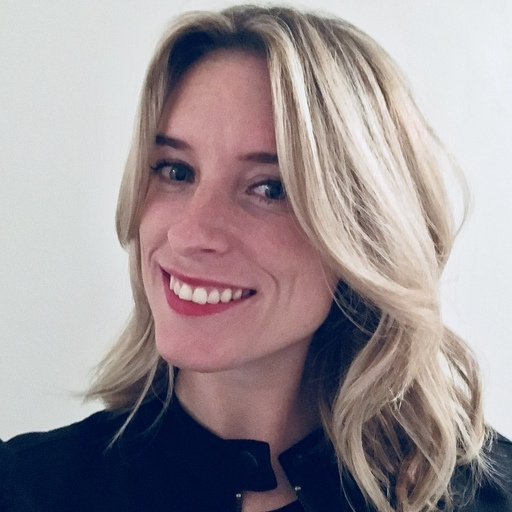
AMY DEVLIN
VP OF STRATEGY
Q: Hey there, Amy! We’re happy to have you with us today. Let’s start with a quick introduction about yourself—the floor is yours. A: I’m Amy Devlin, VP of Strategy. I’m based in Seattle and lead Strategy for our West Coast offices. I’m a boomerang with a total of about nine years at GPJ.
Q: We’re happy to have you with us! And congratulations on nearly a decade of incredible work. Now, if you could describe what you do with a meme, what would it be?
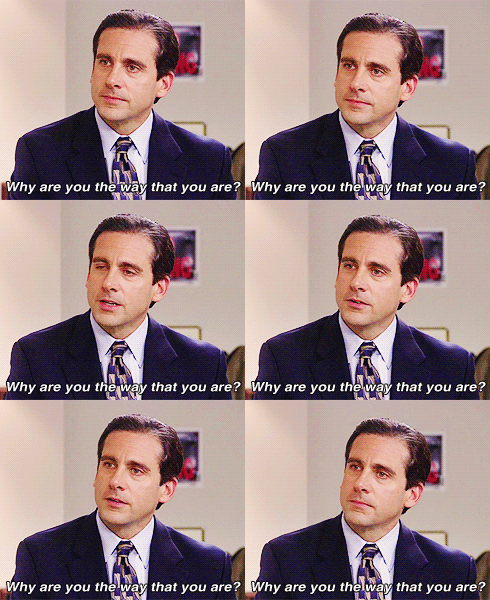
A: So much of strategy is about understanding people. Experiential is incredibly multifaceted, and we’re not just looking at clicks or conversions. We have to understand how humans move, feel, choose, and interact across an entire environment.
Q: Exactly. We can’t base our strategy on a few qualitative data points—we need to have a full picture of who we want to impact and why (our strategists are great at this). So Amy, what would you say your typical day looks like as a strategist? A: The best part about being a strategist is that there’s no typical day. I do have a few routines, though. Every day I try to read three things: what’s new with the client brands I’m working on, what’s happening in our industry, and something from culture that hints at where behavior is going. I also usually end my day with a walk. That’s when I manage to get out of my head and connect a dot, solve a problem I’ve been wrangling, or simply quiet my mind before switching into mom mode.
Q: It sounds like leaning on those consistent routines helps you embrace the atypical days with ease. What do you think led you to strategy work? How did you know strategy was for you? A: I actually started my career as a creative way back when I interned at a marketing agency in Boston. That’s where I first learned about this other role called Strategy and realized it was the job for me. I wanted to be part of the creative process, but I found myself more drawn to discovery, research, and turning insights into unexpected places to inspire creativity.
Q: A creative turned strategist! That’s awesome. We’re always open to helping our team members explore their career interests, because sometimes it leads them to a role they thrive in! That being said, how has GPJ supported your career path as a strategist? A: There’s always a new account, a new challenge, or a new trend to tap into and keep up with. Nothing I’ve done here has ever felt boring. There are just too many interesting problems to solve and places to evolve. A huge part of that energy comes from our incredible Strategy practice. The team is endlessly curious, and our Slack channels are constantly buzzing with articles worth reading, ideas worth exploring, and conversations that make you see things differently.
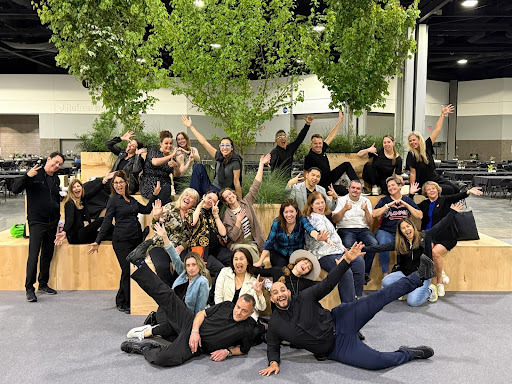
Q: The constant upleveling and uplifting presence amongst our teams is something we’re proud of. During your nine years here, what has been your favorite project you’ve worked on? A: That’s like asking who is your favorite kid! For the record, I only have one kid so I can actually answer that question. But for work, I can’t pick just one project, but my favorites are always the ones that push into white-space opportunities where we can break the mold and try something new. Clients who are willing to take those leaps always create the most exciting and rewarding work.
Q: AGREED! Getting to push the envelope with our clients is always an inspiring space to be in. So, Amy—what would you say fuels your creativity? A: Oh wow, everything! Truly, everything I read, watch, listen to, the people I meet, the places I go, friends, family, colleagues, nature. All of it becomes lived experience that fuels creativity. Every strategist brings a bit of themselves and their experiences into the work, leaving an impression on what we put out into the world.
Q: That’s a great perspective to have on all that we do, in and out of the office. Speaking of outside of the office, do you have any cool hobbies or facts about you that make you a stronger strategist? A: I’ve worked in all kinds of industries, from insurance to architecture to being a marketing director for an outdoor apparel company where we all wore so many hats I even ended up in the photoshoots. It’s made me pretty good at picking up new worlds quickly. When I was younger I wanted to be a marine biologist and even spent time studying marine ecology at sea in the Virgin Islands on a tall ship, which mostly taught me that I am great at science but terrible at seasickness. I’m also a serial hobbyist with pottery, woodworking, and kayaking in the rotation. None of it makes me an expert at any one thing, but it does make me endlessly curious, which is basically the strategist superpower.
Q: What an impressive list of hobbies and interests, all fueled by curiosity—which is, as you said, a strategist’s superpower. Stepping away from what we do know about strategy for a moment, what is the biggest misconception about strategy that you see most of? A: There are two big misconceptions about strategy. The first is that you can skip strategy and just move forward and begin executing. Technically, you can, but it’s like building a house on quicksand. Without a solid foundation, everything else becomes unstable. The second misconception is that strategy is “expensive.” In reality, it’s not an expense, it’s an investment. Skipping it early often leads to costly revisions and the stress of last-minute fixes later on.
Q: Investing in a solid foundation is always worth it! As you’ve transitioned from marine biologist to creative to strategist (with many other steps in between), was there anything you didn’t expect to learn while working as a strategist? A: Maybe it’s less about being a strategist specifically and more about working in the world in general, but I didn’t expect to learn how important it is to simply be delightful to work with. Show up, be organized and thoughtful, bring some levity, and be a good listener for colleagues and clients. The longer I do this, the more I realize that getting people to invite you into their process and trust you as part of their team is half the battle. You can have the smartest, most insightful work, but if you can’t collaborate, it won’t make the impact it should.
Thank you, Amy!
ANDREW LACANIENTA
ASSOCIATE DIRECTOR OF STRATEGY
Q: Hey there, Andrew! We’re happy to have you with us today. Let’s start with a quick introduction about yourself—the floor is yours. A: I am Andrew Lacanienta, an Associate Director of Strategy based in our San Francisco office. I have been with GPJ for almost five years. At my core, I love understanding what makes people tick and shaping experiences that help them feel seen and supported. In a world and workplace that often move fast, I seek and enjoy slowness, pause, and quiet. I value time to let the mind wander in white space because that is often where clarity tends to rise.
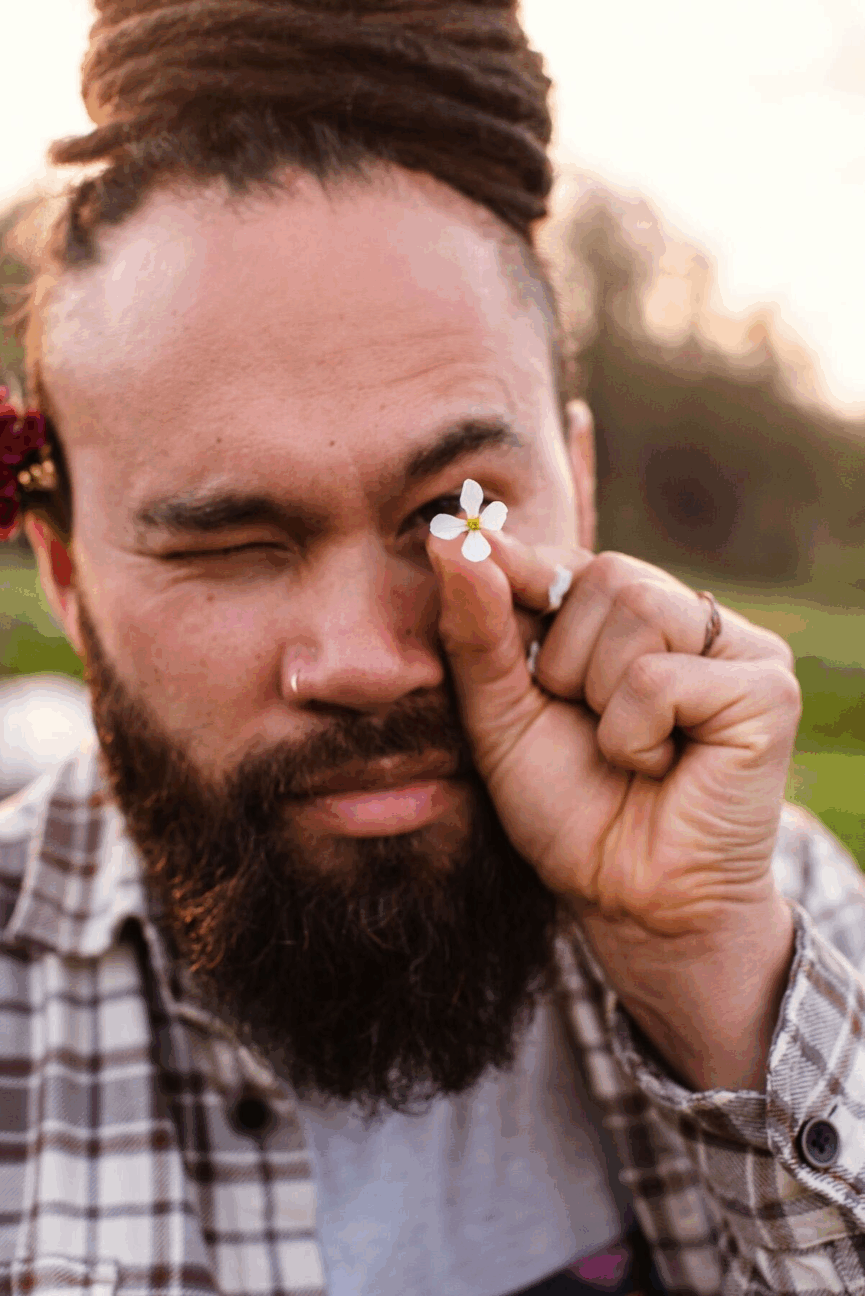
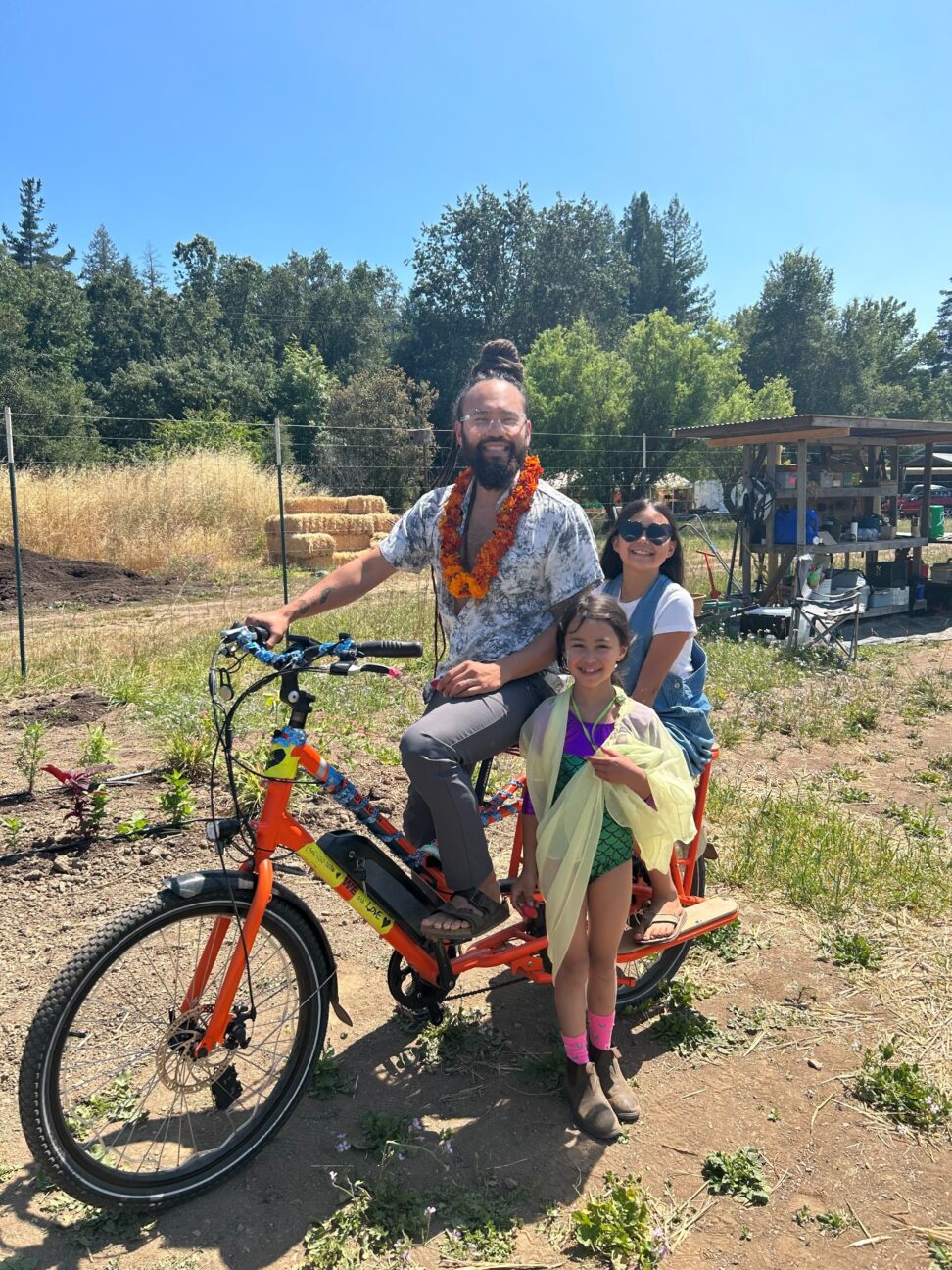
I live in Forestville, California in a communal land project of ten families on eighty shared acres. It has the spirit of a seventies commune, just with fewer psychedelics and more working infrastructure. My partner runs Beet Generation Farm on the land, where we grow food for farmers markets and a sixty member CSA. We spend a lot of our free time doing homestead activities like making kraut, crafting Italian nocino from green walnuts, drying persimmons into hoshigaki, and foraging for wild chanterelles when the season is right.
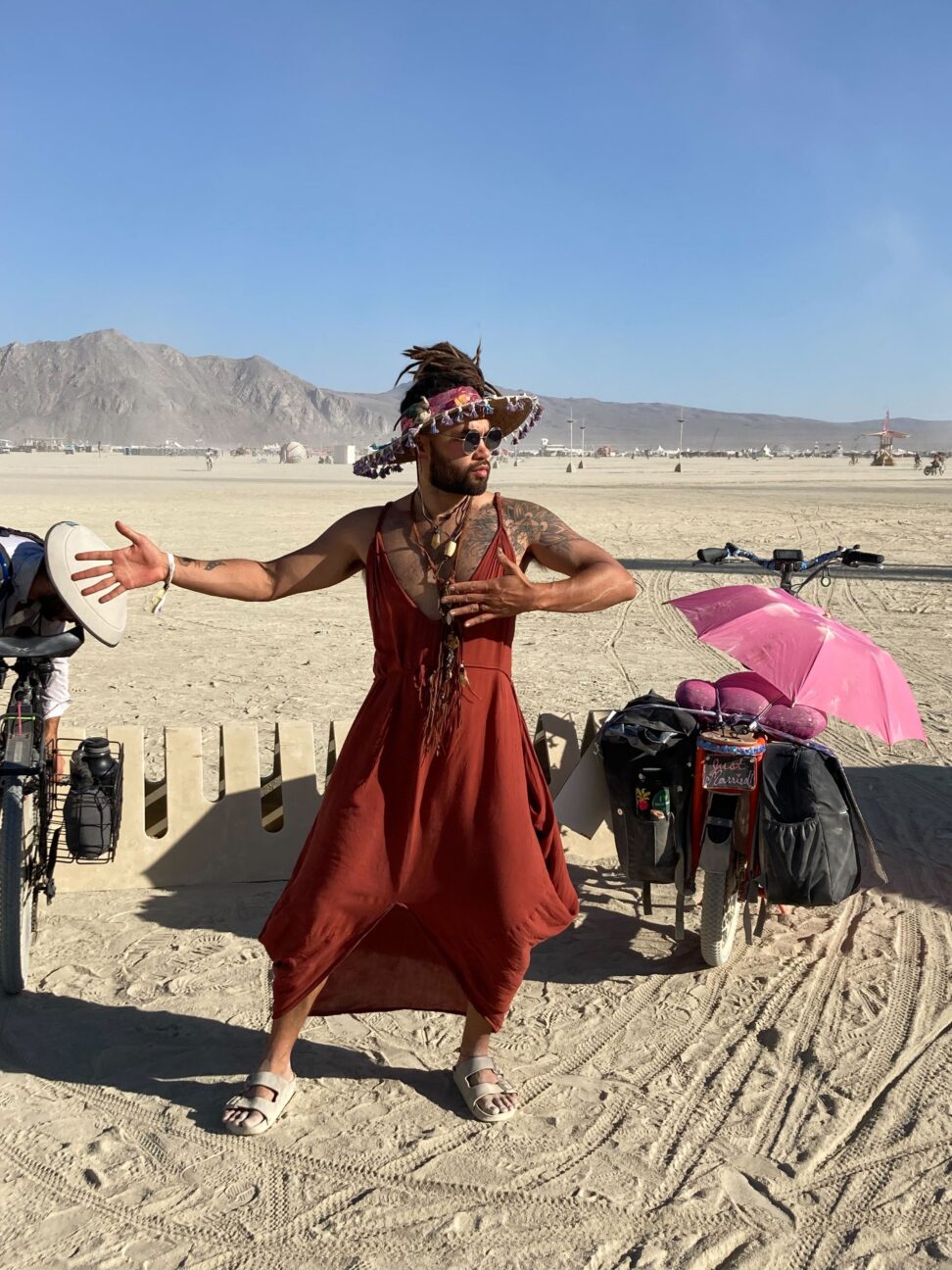
Outside of work, some of my favorite practices are yoga, meditation, ceramics, and dance. These are the things that keep me grounded, curious, and attentive. If I am not working, you can usually find me with clay on my hands, dirt under my fingernails, or a cup of tea in the garden while I wonder what kind of teapot I’ll make next.
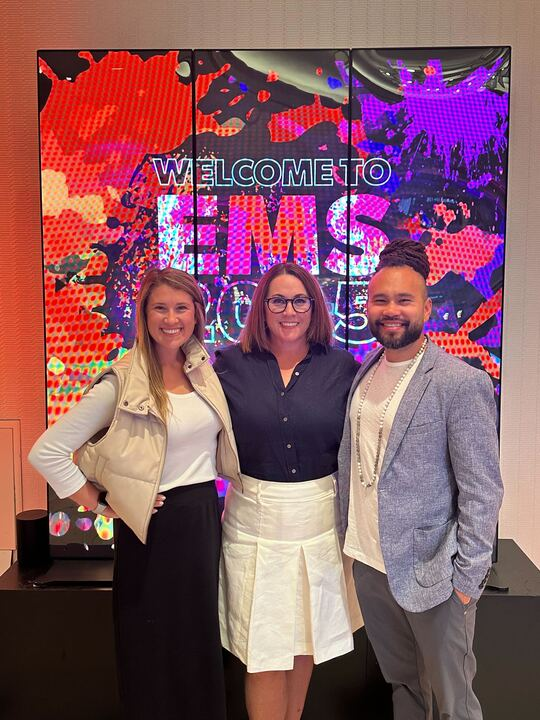
Q: That’s amazing! When you’re not sculpting, meditating, or tending to your farm, what does your typical day look like as a strategist, Andrew? A: A typical day for me starts with listening. It might be a client conversation, a stakeholder interview, or even a quick sync with a creative partner. No matter who is on the other side, my first job is to understand what they really need. People often have an intuitive sense of their needs, but articulating them clearly can be hard. So I ask questions, interpret, translate, and help them find the language for the thing they can feel but cannot quite name.
Some days I am digging into research, collecting data from interviews, surveys, reports, or walking through the physical spaces our audiences will eventually inhabit. Other days, I am stitching together a tension or insight that has been quietly sitting beneath the surface of a project, waiting to be named.
Strategy requires a blend of curiosity, empathy, and pattern recognition. It is part detective work, part anthropology, part creative provocation.
Once I have the right insights in place, the work shifts toward alignment. Often that means briefing a creative team, a client team, or both. These moments are some of my favorites because I get to paint a picture of what is possible. I share what we have learned about the humans at the center of the experience, highlight tensions worth solving, and offer thematic openings that can spark bold ideas. My job is not to dictate creativity. It is to fuel it in a way that brings clarity and direction.
Throughout the day, I also find myself acting as a grounding force in meetings. While people naturally drift into tactical details or debate minutiae, I hold the altitude for everyone. I pause when needed, lift the conversation back up to the macro view, and remind us why we are here. Sometimes that means guiding the group through a collective breath, sometimes reframing the question, and sometimes nudging us out of the weeds entirely. My goal is to keep us moving in a purposeful direction instead of spinning in circles.
The end of my day often includes synthesizing learnings or translating data into a story. Measuring an experience, understanding how it performed, and using those insights to guide next year’s decisions is just as important as shaping the experience itself. Strategy does not end when an event concludes. It continues through reflection, storytelling, and iteration.
In short, my day is a flow of inquiry, insight, clarity, and collaboration. It is equal parts intellect and intuition, listening and guiding, zooming in and zooming out. And on the human side, I try to bring a sense of calm throughout it all so that everyone around me feels grounded, supported, and ready to create.
Q: Your ability to articulate the (often hectic) day-to-day of a strategist is a great reflection of the clarity work you do with our clients and teams. It’s difficult to cut through the noise to get to the root of the challenges we’re looking to solve. So, Andrew—how did you find your way into this role? What led you to strategy work? A: I never set out to become a strategist. For a long time, I identified as an experience designer. My journey started more than a decade ago in an undergraduate course called Creating a Good Life Through Experience Design.
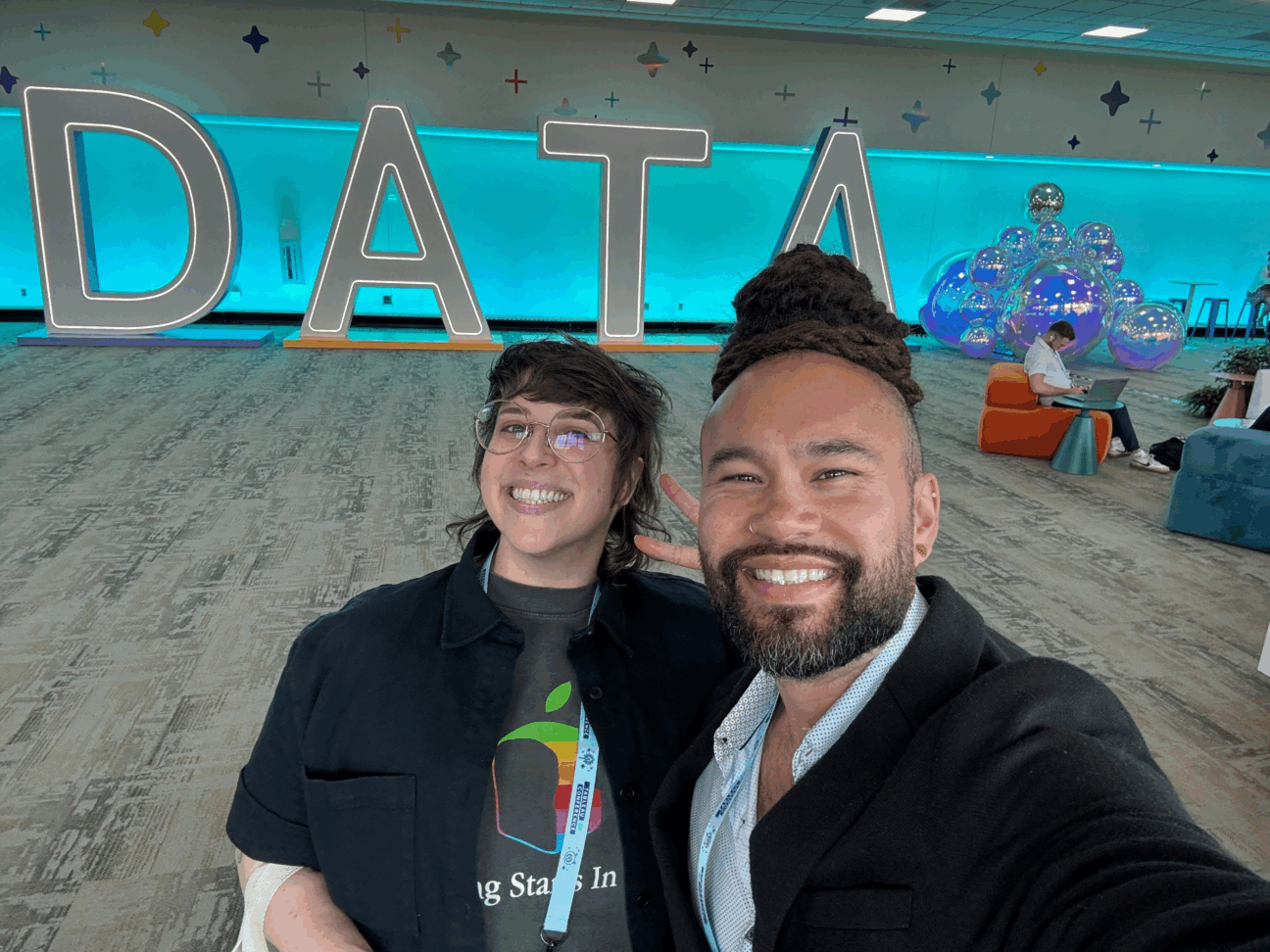
At the time, I was introduced to The Experience Economy by Pine and Gilmore. I remember exactly where I was sitting when I first read it. The idea that experiences could be intentionally crafted to create meaning, memory, and transformation opened something in me. I knew I had found my language.
Back then, the field of experience design was still young, and the career paths were not clearly defined. I loved the discipline, and I also loved teaching, so people encouraged me to combine the two. That led me into academia, where I pursued a master’s degree, completed a PhD, and eventually secured a dream role at Cal Poly San Luis Obispo in a department that had just rebranded as Experience Industry Management. I worked alongside brilliant people who were building the field from the inside out, and it felt like exactly where I was meant to be.
My time teaching and researching experience design in academia shaped the foundation of how I think about human-centered design and experiences. I love strategy because it blends empathy, creativity, and clarity. It lets me hold the big picture, guide teams with intention, and help shape experiences that aim to truly serve the people at the center of them.
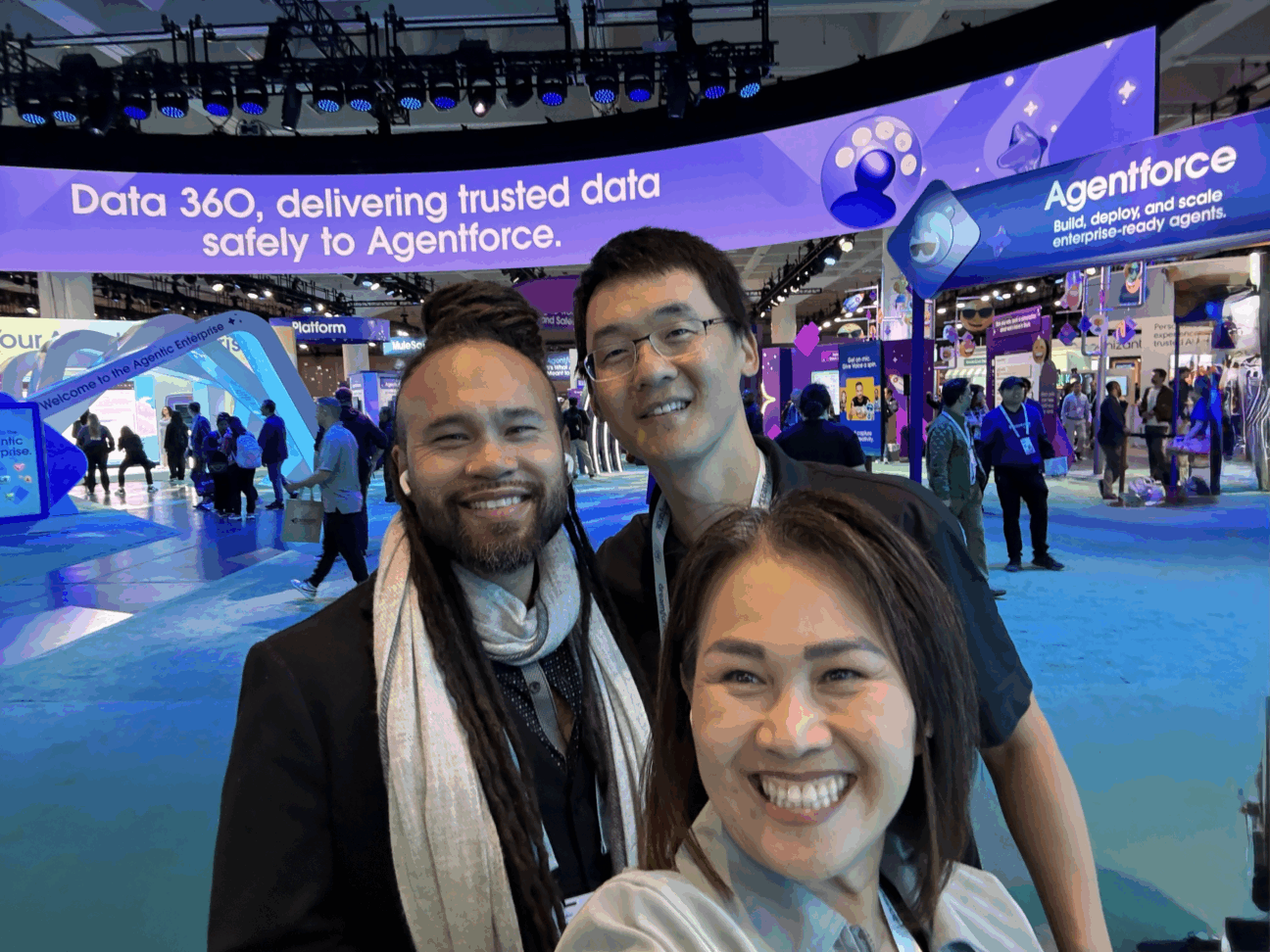
While I loved teaching, I also craved the opportunity to design experiences in the real world, to collaborate with creative minds, and to see ideas come alive in physical space. Strategy, although I did not call it that at the time, was at the root of everything I taught: human-centered design, experience flow, emotional arc, insight development, and the art of asking the right questions.
When GPJ found me, it felt like a natural evolution. Suddenly, I was applying the principles I had been teaching for years to some of the most complex and ambitious brand experiences in the world. The titles had changed, but the heart of the work stayed the same. I was still designing moments that matter, still uncovering human needs, still crafting the architecture of meaningful experiences. Strategy simply became the bridge between the academic world I came from and the experiential world I stepped into.
The path was never linear, but every step has felt connected. Teaching. Research. Experience design. Now strategy. It all folds together into one journey dedicated to understanding people and shaping the experiences that move them.
Q: Along that nonlinear, fulfilling, and uniquely exciting path, how has GPJ supported your career as a strategist? A: I’ve felt super supported by my leaders like Amy Devlin and Brendan Brown. They’ve given me the space to lead, to mentor others, to travel, and to grow. Basically, they’ve handed me every opportunity to bloom, and I’m really grateful for that.
Q: In the midst of leading, mentoring, traveling, and growing, what’s been your favorite project you’ve worked on? A: One standout was working on an RFP for Salesforce with Matt Cavanaugh. We had total creative freedom to reinvent a marquee moment, and even though we didn’t end up winning that bid, the final deck became kind of an agency legend. It was just a blast to push the creative envelope that far, see what we were capable of, and feel incredibly proud of the work we did.
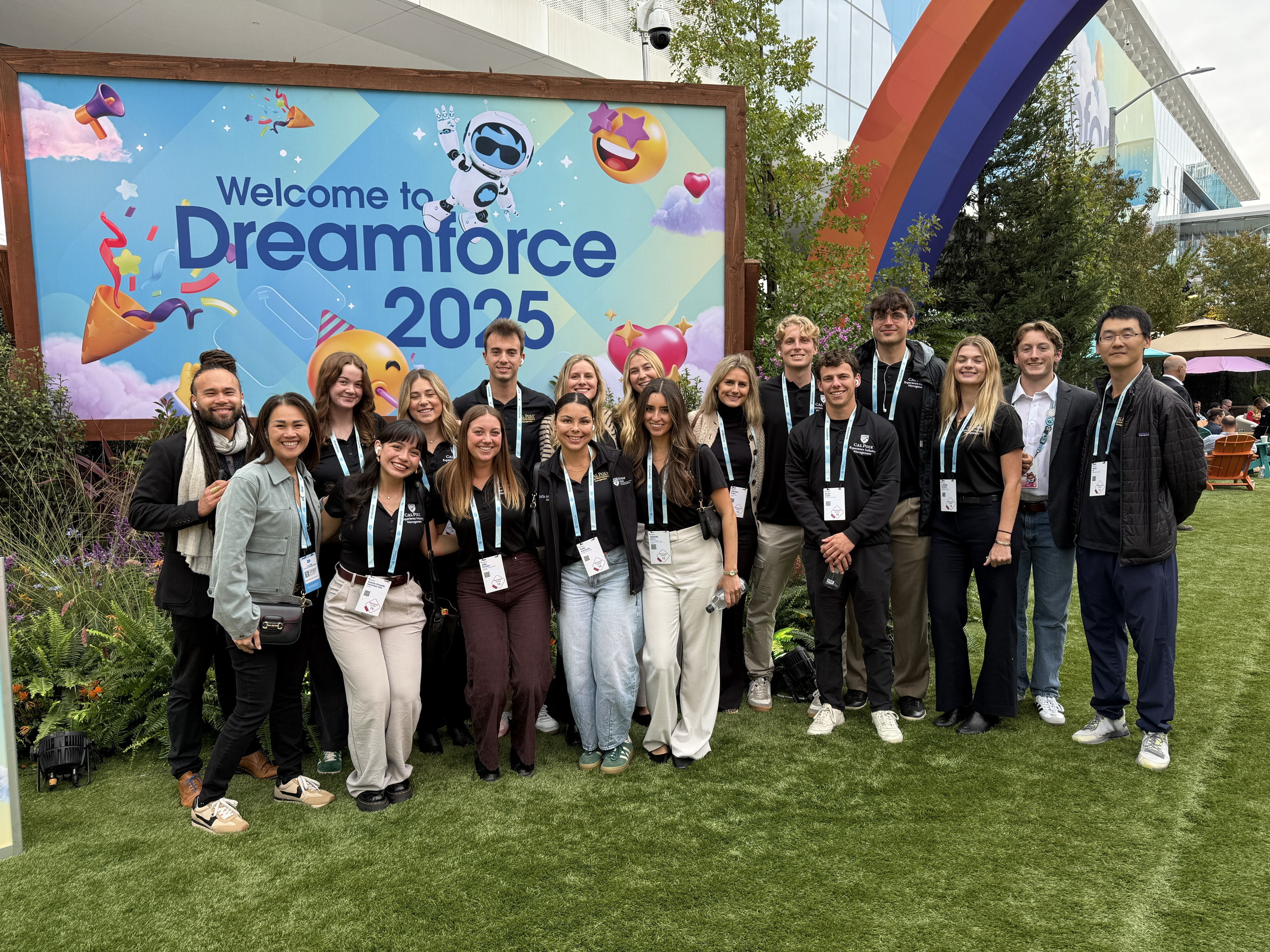
Q: We may not have won the bid, but we sure are winners when it comes to having strategists and creatives that love what they do, no matter the outcome! Speaking of being creative, what fuels your creativity? A: It’s actually the opposite of constant stimulation—it’s simplicity and white space. Give me a quiet moment, a pot of tea, and a little room to let my mind wander, and that’s where the real creative sparks come from.
Q: Quiet moments are just as revitalizing as inspiring ones! Do you have any cool hobbies or facts about you that make you a stronger strategist? A: I’d say things like yoga, meditation, and pottery really help. They slow me down and sharpen my senses. Being able to sit with a moment and notice all the subtle details is a lot like being a strategist: it’s all about observation, patience, and letting insights rise to the surface. Drinking a pot of tea is an incredible sensory experience with levels of depth most people don’t experience. The aroma, for example, of fresh tea leaves before being brewed and noticing how they change as they unfurl, open, and steep. Tracking how the flavor profiles shift and transform with each additional 5 second steep of hot water. Enjoying the steam as it dances off the top of the tea and disappears into the air. There is so much depth to tea—it’s my favorite part of the day.

Q: Now Andrew, what would you say is the biggest misconception about strategy that you see most of? A: One big misconception is that if a company has “strategy” in someone’s title, they don’t need an experiential strategist like me. In reality, we bring a different lens—one that’s all about designing the experience itself, not just the business strategy. And yes, strategy is more than just a brief at the start—it should weave through the entire process.
Q: And what’s something you didn’t expect to learn while working as a strategist? A: I didn’t quite expect to have to dive into so much pop culture just to stay “in the know.” But it’s been an interesting journey because it keeps me relevant and helps me connect the dots in unexpected ways.
Q: Anything else you’d like to share? A: Other random things I love/love about myself: I love to dance and do contact improvisation, which is kind of like improvised, contemporary partner dancing. I love to woodwork, build things like tables and furniture. My partner and I own a small farm with a CSA and sell at farmer’s markets – I envision offering more experiences on the farm in the future that allow us to help people connect more deeply with the land, food, and community.
Thank you, Andrew!
GPJ strategists are the kindling that catches hold of the creative sparks brought forth by our clients and creatives. We are so grateful for their dedication to the craft of strategy and always look forward to seeing the undeniable impact they have on each and every project. Thank you, GPJ strategists!
