

Authentic experiences begin with authentic people. At GPJ, our strategists empower our creative teams to think big while anchoring ideas in what matters most: our clients’ goals. Strategy at GPJ is a multidisciplinary practice. By blending research, cultural insight, and brand intelligence to shape our experiences, we create moments that are not only inspired, but intentional.
This is the foundation that makes our strategy teams indispensable—this is the driving force behind experiences that resonate deeply and perform powerfully. Last week, we highlighted three of our superstar strategists (you can check out their stories here). This week, it’s time to meet a few more of the faces behind the magic!
JOSH FISCHER
SR STRATEGIST EXP
Q: Hey there, Josh! We’re happy to have you with us today. Let’s start with a quick introduction about yourself—the floor is yours. A: Josh Fischer, Senior Strategist, Chapel Hill, NC. Been at GPJ for 4 years.
Q: Thank you for chatting with us today, Josh! Time for one of our favorite questions: if you could describe what you do with a meme, what would it be?


A: This GIF is an inside joke with my manager, Jon Gaffney. Strategists often connect the dots and simplify complexity. When in the messiest parts of the work, it can feel like Charlie Day’s hilarious mail room scene from It’s Always Sunny in Philadelphia.
Q: Great minds think alike (looking at you, Hadley!). What does a typical day look like as a strategist? A: A mixture of meeting with clients and internal creative/production teams. Balanced by more solitary research/writing work for creative presentations and other decks.
Q: And how did you find your way into this role? What led you to strategy work? A: I used to work at Rice University Art Gallery, where we commissioned temporary art installations. I love working with creative people to make big ideas come to life, and strategy at GPJ is a perfect fit for that.
Q: What a unique background! From art installations to strategy work, how has GPJ supported your career path as a strategist? A: By getting me onsite to audit events and assembling a strategy department that is an amazing collection of smart, curious, and collaborative colleagues who always wow and inspire me.
Q: During your time here as a strategist, what’s been your favorite project you’ve worked on so far? A: IBM: Under the Surface activation. We took a complex, technical subject—an organization’s vast “attack surface” and IBM’s cybersecurity capabilities—and made it immersive and tangible.

Q: That’s a gorgeous activation—we see those art gallery genes kicking in! So Josh, what fuels your creativity? A: I love looking at work by creative people who take our everyday reality and transform it into something unexpected and exciting. A few of my absolute favorites include Jonathan Schipper, Thorsten Brinkmann, Soo Sunny Park, and Yasuaki Onishi.

Q: Speaking of something unexpected and exciting, do you have any cool hobbies or facts about you that make you a stronger strategist? A: I have little kids, and their ability to ask questions (often hilarious ones) inspires me to keep questioning things we may take for granted.
Q: Little kids ask AMAZING questions! They remind us to embody a strong sense of curiosity. And we’re curious—what’s the biggest misconception about strategy that you see most of? A: I see more confusion than misconception. Many people do not know what a strategist does because the role can be fluid and change depending on the project/needs. So it is understandable confusion!
Q: Within that masterful adaptability that you all have to possess as strategists, what’s something you didn’t expect to learn? A: One thing I love and did not expect is how strategy pulls from a wide range of areas to find insights: science, neuroaesthetics, art, psychology, and cultural trends. The list could go on, but the fun part is being inspired by each strategist’s unique take.
Thank you, Josh!
SHANE QUINN
VP STRATEGY AND PLANNING
Q: Hey there, Shane! We’re happy to have you with us today. Let’s start with a quick introduction about yourself—the floor is yours. A: Shane Quinn, VP of Strategy & Planning, Boston, 7.5 years.
It’s great to meet you! Now for one of our favorite questions—if you could describe what you do with a meme, what meme would you choose?

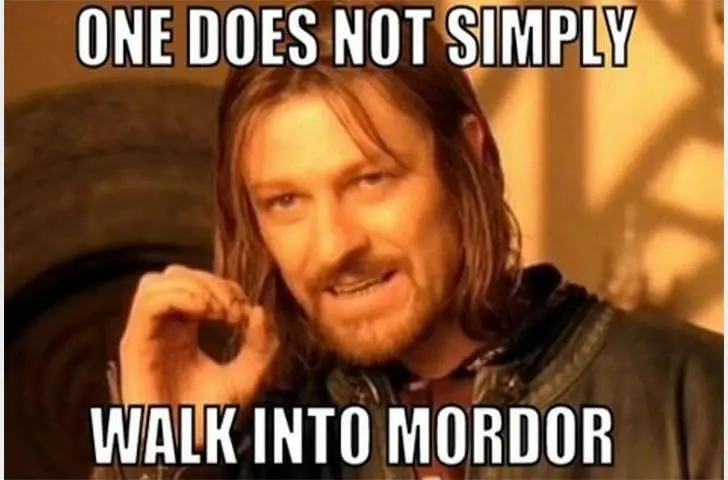
Q: Boromir gets it. So Shane, what does your typical day look like as a strategist? A: The best part about being a strategist is that a typical day is anything but typical. There’s always a new problem to solve, a new challenge to tackle, or something new to learn.
Q: As a strategist, you probably thrive in an environment that requires you to adapt on a daily basis! How did you find your way into this role? What led you to strategy work? A: Throughout my career, I discovered that I’m good with words, love solving big problems in creative ways, and—for some reason—thoroughly enjoy finding meaning within the mess. These are all trademark ingredients of a strategist.

Q: As you’ve embraced the challenge of solving those larger-than-life problems, how would you say GPJ has supported your career path as a strategist? A: GPJ has given me the autonomy to grow, curate, and develop my own process and way of working. There’s no right way to “do strategy,” but by working with great people across many different types of projects, I’ve been able to find my unique voice and style as a strategist.
Q: GPJ loves to give our team members the space and autonomy to craft their career paths as well as the tools to turn that growth into action. As you’re on this strategy journey, what’s been your favorite project you’ve worked on? A: Google Cloud Next. Wildly challenging, exhausting, and all-encompassing—but ultimately even more rewarding.
Q: Surely these events require immeasurable amounts of creative fuel. What fuels your creativity, Shane? A: The unknown, and the reality that there’s always a new, better, or more interesting way of tackling a problem.
Q: And do you have any cool hobbies or facts about you that make you a stronger strategist? A: My experience as a musician has shaped my ability to create something from nothing, arrange ideas into something cohesive, and relent control of a cherished idea to other collaborators in the spirit of making it even better. And my experience as a parent has made me more tolerant, patient, and appreciative of the value of communicating something simply and effectively.
Our life experiences, like being a musician or a father, truly shape our abilities in the workplace. Switching gears a bit, what would you say is the biggest misconception about strategy that you see most of? A: That it’s expensive, esoteric, and merely “nice-to-have.”
Q: And last, yet certainly not least—what’s something you didn’t expect to learn while working as a strategist? A: I didn’t realize how much I’d enjoy managing people—it’s easily the best part of my job, and we’ve got the best team on the block!
Thank you, Shane!
ELIZABETH BIKOWSKI
SR EXP STRATEGIST
Q: Hey there, Elizabeth! We’re happy to have you with us today. Let’s start with a quick introduction about yourself—the floor is yours. A: Elizabeth Bikowski, Senior Strategist, Boston (remote), 4.5 years.
Q: So Elizabeth, what does your typical day look like as a strategist? A: I think when it comes to strategy, there is literally no typical day—which is what the majority of us love about it. Strategy is a lot of research, writing, processing, synthesizing, and briefing.

It also sometimes involves workshopping, brainstorming, pinch-hitting for a variety of roles, creative copywriting, and team-building. It’s honestly different day-to-day and project-to-project. I would say the majority of the day involves working with creative teams to bring the client’s vision to life, but rooted in strong insights that help create a compelling experience.
Q: It sounds like you need to be adaptable and quick on your feet to keep up with everything strategy throws at you! How did you find your way into this role? What led you to strategy work? A: I actually started in design and worked my way over to strategy. I have a Masters in Museum Exhibition Design, which is a lovely mix of strategy and creative design. I moved from there to 3D design and creative direction for a mid-size experiential company. I found myself just really missing finding and diagnosing the why behind experiences, bringing in the research, thought, and insight that transforms a simple event into a truly meaningful moment. So, I turned my sights back towards strategy and found a home at GPJ.
Q: Museum Exhibition Design is such a unique crossover, and it makes a lot of sense to see how you came into strategy work because of it. Since then, how has GPJ supported your career path as a strategist? A: GPJ, especially my boss and his boss, have really facilitated exploration within the discipline and been more than receptive and encouraging of my side quests. I have been able to leverage continuing education classes and attend events to broaden my exposure to different types of experiences. I have a creative background, and I miss that side of the work sometimes, and have really lucked out with the creative teams I collaborate with and their openness to include me in their processes and being supported in how I approach strategy both within and outside of our practice. The strategy team also has a really great culture and bond. We are a tight-knit team, and that vibe carries through to everything.
Q: We love to see how close all of our teams get after working on so many amazing projects together. Speaking of projects, what’s your favorite project you’ve worked on thus far? A: This is so hard. Google Cloud Next is the project I spend most of my time on, and watching its evolution from the first time I worked on it back in 2022 to the upcoming event in 2026 is really special. I also got to work on Figma Config this year, and it was really awesome to switch from B2B to B2C and dip my toes in a slightly different world for a bit.

Q: Congratulations! It’s always rewarding to watch our clients and their projects evolve. We love seeing our team members evolve, too—we’re happy you had that B2C exposure! So Elizabeth, what fuels your creativity? A: Reading, podcasts, nature, watching how my 18-month-old daughter moves through the world, and the innate curiosity that comes with that age. I think the biggest boon to creativity is actually giving your mind time to process and rest. I also love collaborating with creative counterparts and other strategists. I really believe ideas become stronger the more they are shared, iterated, and refined. Nothing is precious, and everyone approaches something in a different way—those perspectives are invaluable.
Q: That’s a great way to look at strategy—it’s ever-changing, just like us! Outside of your work, do you have any cool hobbies or facts about you that make you a stronger strategist? A: I have a really wild background that helped shape where I am and how I approach work. I started professional life as an archaeologist, did a stint of teaching English abroad, and then worked on the client side of events before entering graduate school. I think this, more than anything, has helped shape how I approach the job and projects, and the way I strive to be a great teammate. My hobbies are pretty typical—reading, writing, baking, researching, gardening, hiking, languages, cross stitch. I think the more you can expose yourself to just everything, especially different ideas and inputs, the stronger your practice becomes. Creativity is a bit of a discipline, yes, it comes naturally, but you have to feed it to make it thrive.
Q: As you feed your creativity to make your strategy stronger, what’s a misconception about strategy that you would not like to feed? A: It’s not really a misconception, more a bit of uncertainty about how to best plug a strategist in. Going with a gardening metaphor (see hobby from above), we can illustrate how strategists move with a project through a few key phases. In the kickoff, we prepare the soil — testing conditions, setting the foundation, making sure everything is primed for growth: the creative approach, the frameworks, the insights, the client alignment. Then, as the creative team plants and nurtures the seeds of the design and experience, strategy shifts form—becoming the irrigation system, quietly circulating in the background, ensuring everything stays nourished, balanced, and on course toward a bountiful harvest.
Q: And last, but certainly not least—what’s something you didn’t expect to learn while working as a strategist? A: I have been in the industry long enough now to know to expect anything and everything and be ready to roll with it, and this is genuinely my approach to every project I am on.
Thank you, Elizabeth!
A big shout-out to all our incredible strategists across the world, providing the essential human intel and unique perspectives that advance our client work further and higher. Stay tuned for Part 3 of our Strategy Spotlights!
