
What Makes Us Human?
From decoding emotional signals in real time to challenging what AI can tell us about our audiences, experiential is getting smarter about measurement—but better data doesn’t always mean a better understanding of what makes us human. This month’s trend gazers: Mike Paglia, Azat Jumadurdyyev, and Meghan Michalski.

Tech can measure emotion better than ever…or can it?
New tools reveal emotional signals, not the full emotional experience.
Emotions are subjective, intangible, fluid, and foundational to audience engagement. In experiential, where emotional response is often a key objective, proper measurement has become table stakes. New technology lets marketers peer even more deeply into their audience’s psyche. Passive tools like Zenus AI use cameras to detect facial expressions and infer sentiment. Alternatively, active tools like Immersion go so far as to indirectly measure the release of oxytocin and dopamine (so-called “pleasure chemicals”) with a wristband that monitors how they change activity in your heart.
Synthetic data can simulate people, not understand them
AI can generate audience insights without capturing the full picture.
AI-powered synthetic data offers a faster, more cost-effective way to explore audience segments, simulate campaign concept responses, test messaging, and evaluate hypotheses without the time and expense of traditional surveys. But these efficiencies raise questions about how accurately synthetic audiences reflect real people’s attitudes, motivations, and behaviors. GWI research found that 67% of professionals who observed AI-generated synthetic audience responses said they failed to reflect their target audiences’ real-world characteristics.

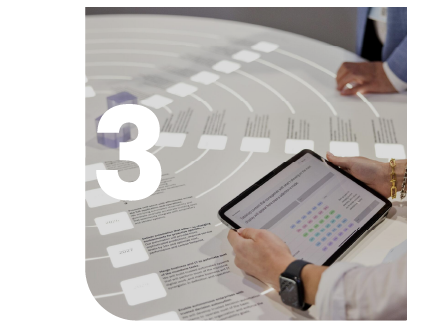
Experiential is creating its own measurement currency
Brands and agencies are building measurement systems to capture the unique value of experiences.
Experiential measurement has historically been a retrospective patchwork job—combining attendance, dwell time, surveys, sentiment, and sales without a clear way to distill those into a meaningful measure of ROX. Coca-Cola uses its Brand Experience Predictor to test concepts pre-event, capture live video feedback, and evaluate impact on mobile after, while DE-YAN’s ERIC methodology received the first ever MASB certification this year—a major industry shift, and just a few examples of an industry working diligently to give experiential a measurement language of its own.
OUT-THERE EXPERIENCES
People, brands and marketers continue to push the boundaries of physical and digital experiences, with new and creative executions popping up across the globe.




Catch up on all our previous Experience Intelligence reports. Or schedule a strategy session with us!
